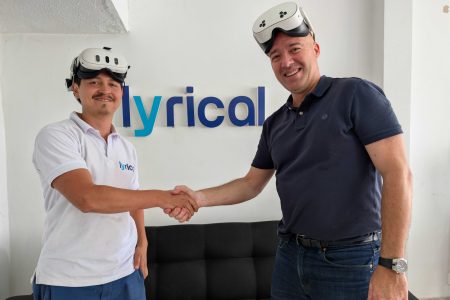
Professor Pepita Giménez-Bonafé from the Faculty of Medicine at the University of Barcelona presented our VR Trans* experience at the XIII CIDUI Congress (International Congress on University Teaching and Innovation) with clear results: 96% user satisfaction
A few months ago, the XIII CIDUI Congress (International Congress on University Teaching and Innovation) was held, a congress organized by the University of Barcelona, the Autonomous University of Barcelona and the Polytechnic University of Catalonia, by today’s teachers for the university of tomorrow.
The International Congress on University Teaching and Innovation (CIDUI) is considered a leading forum for improvement and innovation in teaching, with a 25-year history within its university system. CIDUI serves as a meeting point for reflection, debate, and the exchange of experiences among professionals from various fields related to teaching, research, and university administration, with the aim of fostering a productive dialogue around the challenges facing current university teaching and education.
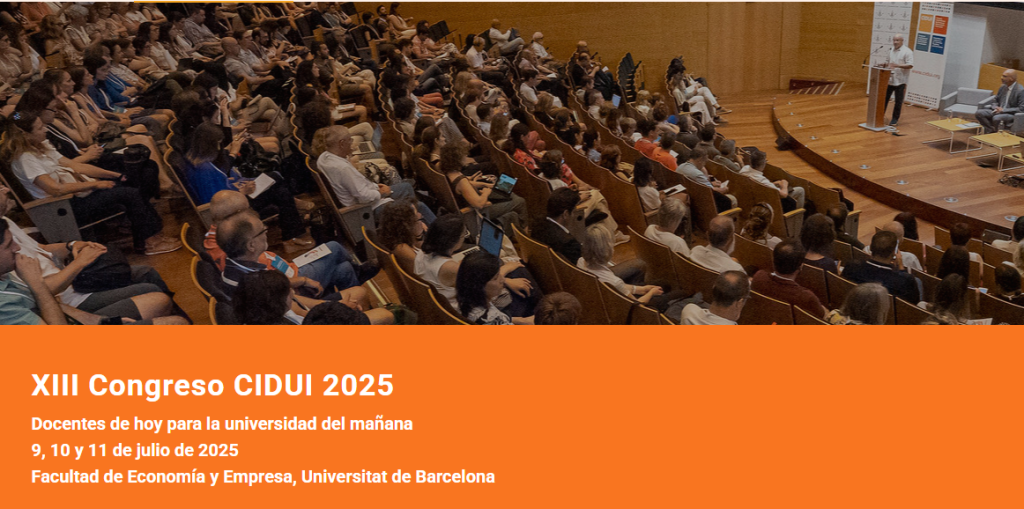
Presentation by Pepita Giménez-Bonafé
Professor Pepita Giménez-Bonafé from the Faculty of Medicine and Health Sciences at the University of Barcelona presented the paper “Forging the Future: Virtual Reality and Gender Diversity in Leadership Training at the University of Barcelona.” In her presentation, she addressed the ongoing challenge of healthcare becoming more inclusive of the needs of transgender people and the health inequalities they face. She also presented the article on gender diversity, “An Innovative Experience to Integrate Gender Diversity into Higher Education and Prepare Future Professionals for an Inclusive World,” which her department has prepared, and the new course “Training in Gender Diversity: Transgender People,” created at the Faculty of Medicine to address the challenges of gender diversity from a theoretical and critical perspective.
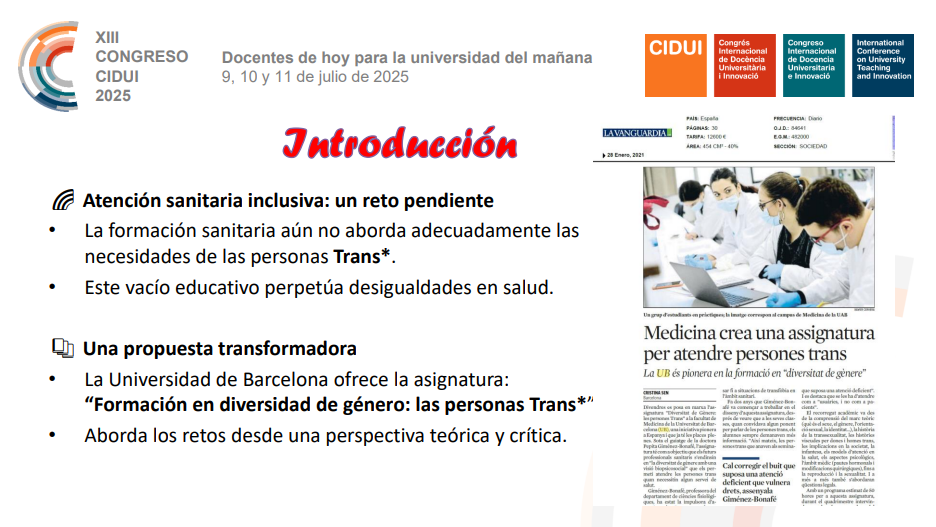
This course includes training in Virtual Reality, which we created specifically for them, allowing them to experience firsthand what it’s like to be a Trans* person in different aspects of their daily life. VR simulates real clinical scenarios, fostering empathy, reflection, and inclusive skills. Empathy, critical thinking, and biopsychosocial skills are essential for providing inclusive, high-quality care.
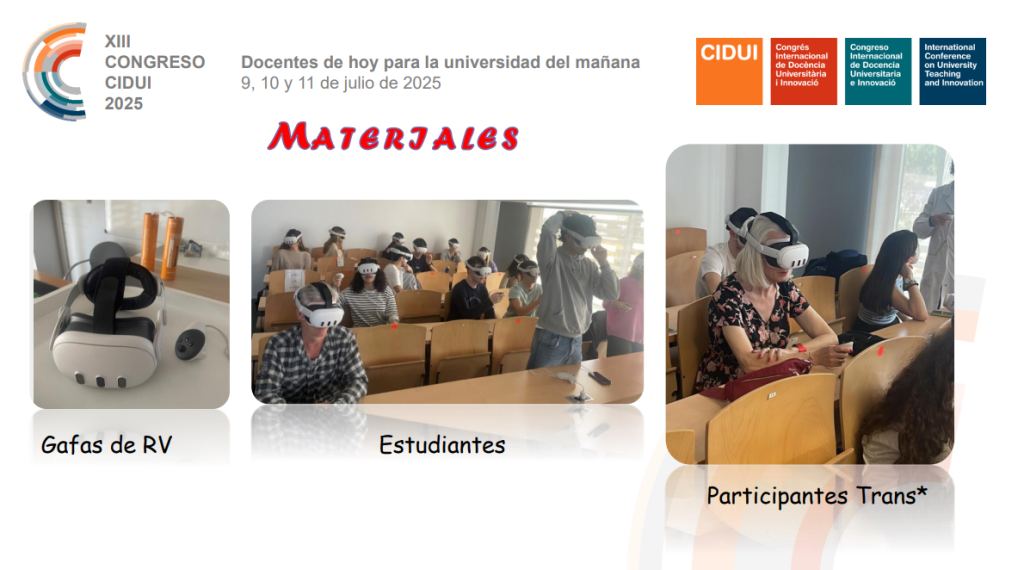
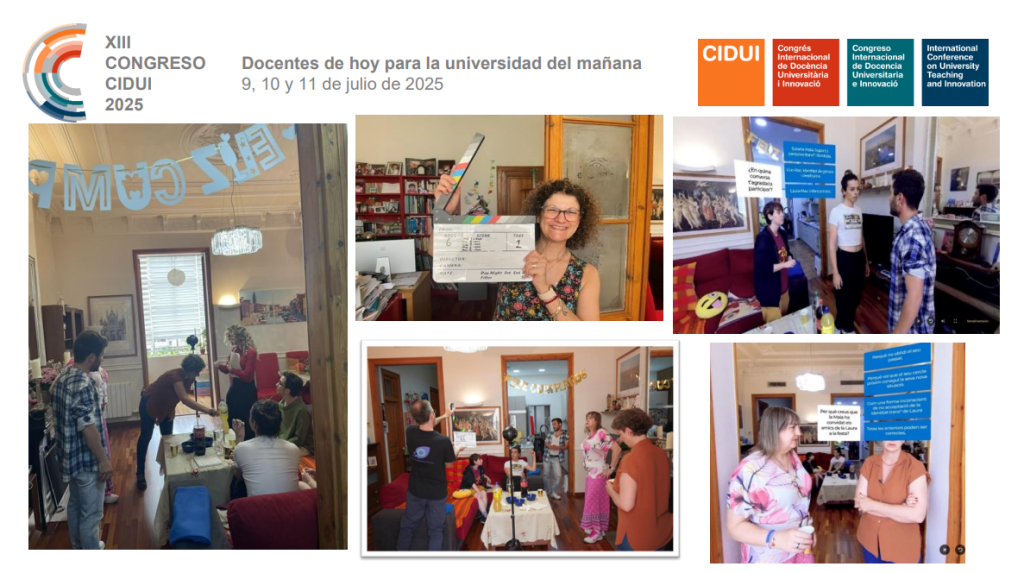
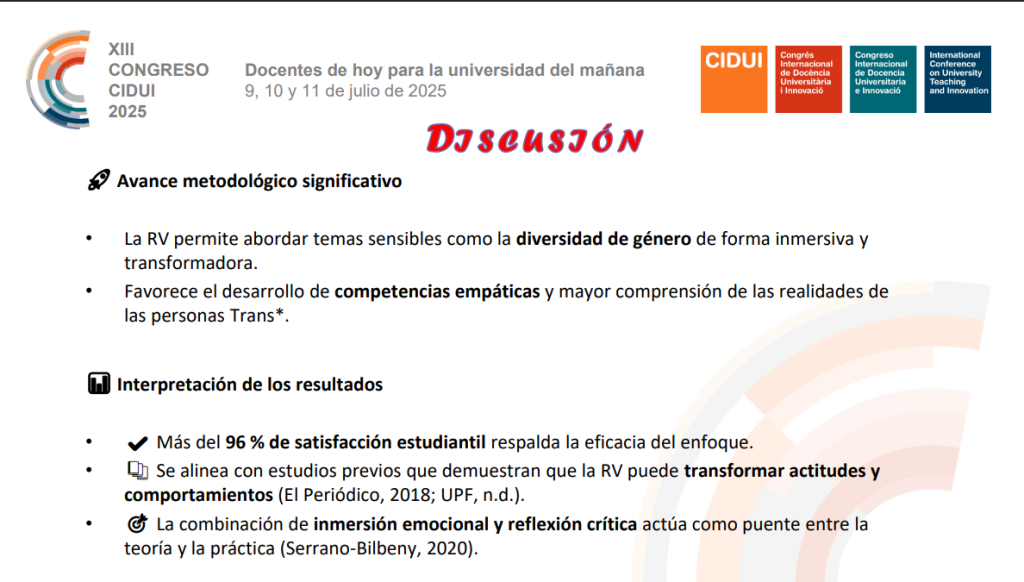
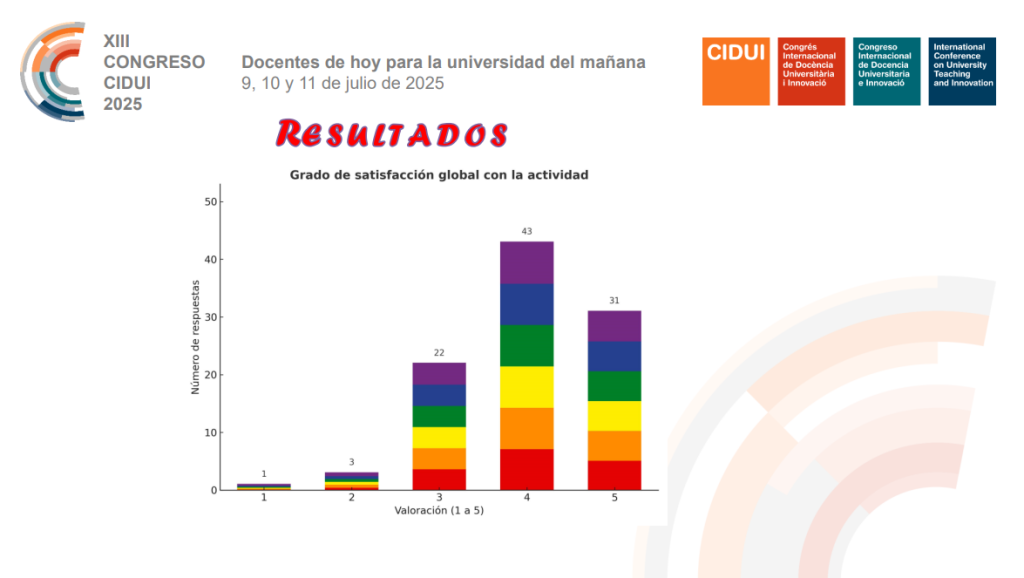
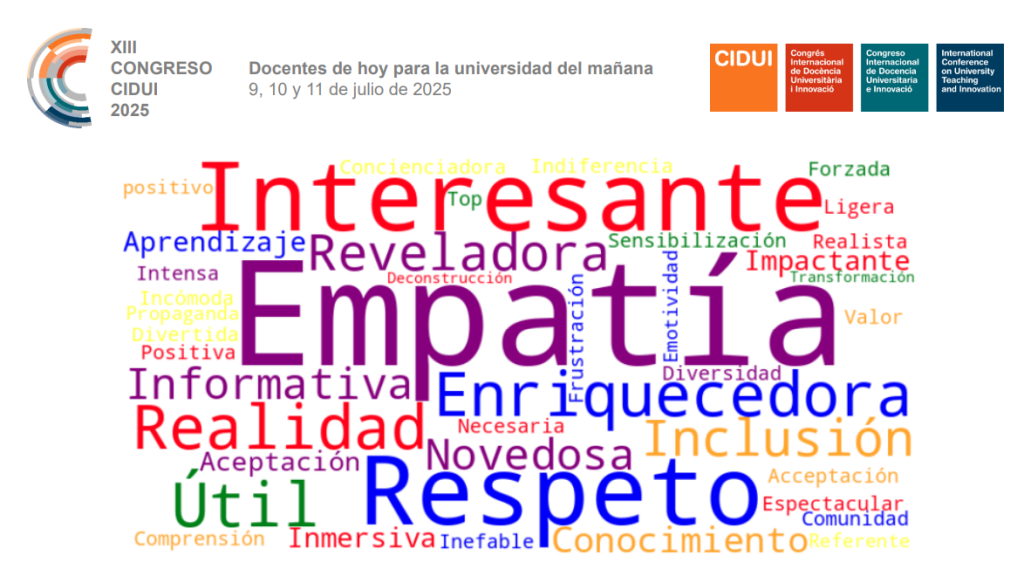
At the University of Barcelona (UB), they are very pleased with the results, which indicate a score of 4 out of 5 for overall satisfaction with the activity. The experience is evaluated using a pretest-simulation-guided discussion-posttest structure. Students report that the experience has fostered empathy, respect, interest, usefulness, realism, inclusion, enrichment, information, and more, among other positive attributes. The 96% student satisfaction rate supports the effectiveness of the approach, which aligns with previous studies demonstrating that VR can transform attitudes and behaviors. The combination of emotional immersion and critical reflection acts as a bridge between theory and practice.
Conclusions
The conclusions presented by Pepita Giménez-Bonafé are clear:
- Virtual Reality (VR) has proven to be effective in raising awareness among Health Sciences students about gender diversity.
- It improves students’ preparedness to offer more respectful and inclusive care to trans* people.
- Integrating these experiences into curricula contributes to a more diverse and equitable educational environment.
- Health inequalities are reduced, promoting more equitable and humanized.
- Pedagogical innovation works: the combination of technology and critical training generates a real and measurable impact.
We are very pleased with the results obtained from this Virtual Reality experience in broadening perspectives on gender diversity. As the University of Barcelona itself states, our training provides students with an emotional and experiential learning environment that allows them to better appreciate the nuances of interacting with people of diverse gender identities. Our training fosters empathy, respect, interest, practicality, realism, inclusion, enrichment, and information, among other things, resulting in a 96% satisfaction rate among the students who have received this training.
Virtual Reality (VR) is a learning methodology that allows for various user-centered activities through experiential and immersive learning. This emotional connection fosters greater confidence and knowledge retention, and its fully immersive nature promotes enhanced concentration without distractions. Making decisions and interacting with the environment raises awareness of the consequences of actions and allows users to experience situations they will encounter in their professional and personal lives. Experiencing firsthand the feelings and emotions generated by different situations improves psychosocial skills and increases the user’s confidence in facing these situations in real life.
At Immersium Studio we are experts in Immersive Learning. Contact us to discover the immersive solution that best suits your needs.
info@immersiumstudio.com